
The Great Indian Food Hunt Abroad: Spice, Sentiment & a Dash of Drama
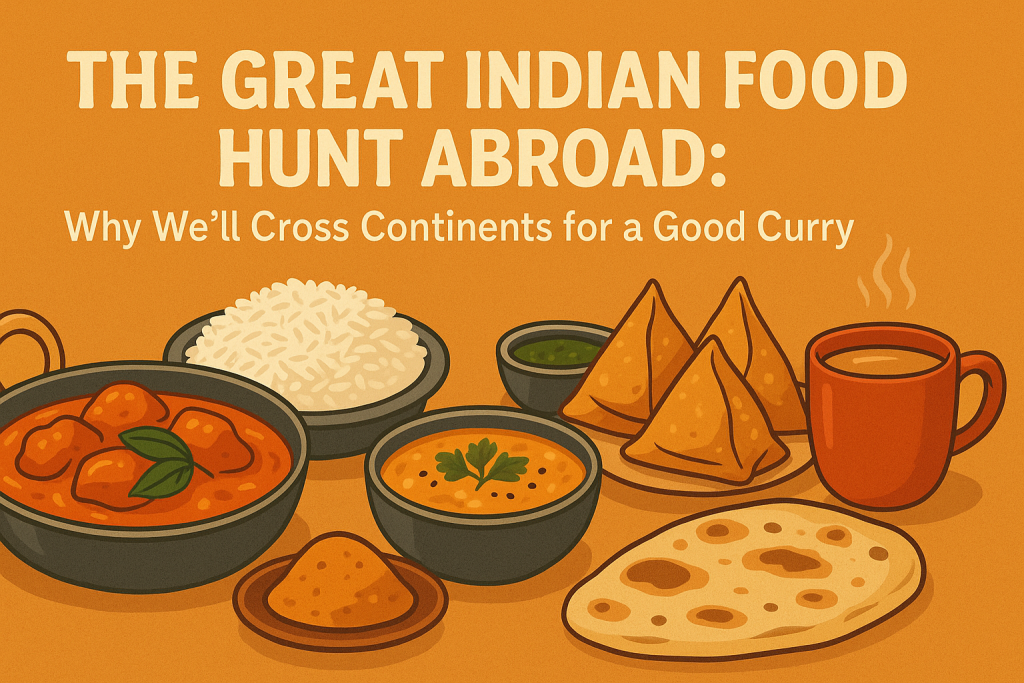
You can take an Indian out of India, but you can never take India out of an Indian—especially when it comes to food.
No matter how far we travel, how many exotic cuisines we try, or how “global citizen” we pretend to be on Instagram, there will come a day—always sooner than we think—when we’re hit with the sudden, overpowering urge for authentic Indian food.
And by authentic, we don’t mean “butter chicken with a hint of cinnamon, designed for polite foreign tastebuds.” We mean food that makes your eyes water, your nose run, and your heart sigh with contentment. The kind of food that tastes like home.
Phase 1: The Culinary Honeymoon
When we first land abroad, our taste buds are on an adventure. Sushi? Why not. Tacos? Bring it on. Vegan poke bowls? Sure, we’re open-minded.
The first week is exciting. The second week is fine. But by week three, the cracks appear. That’s when the thought sneaks in, slow but powerful:
“Mujhe dal-chawal chahiye.”
You realise quinoa can never comfort you the way steaming rajma-chawal can. And no, avocado toast doesn’t qualify as a “wholesome meal” in your dictionary.
Phase 2: The Search Begins
Armed with Google Maps and unrealistic expectations, the hunt starts. Search terms include:
- “Best Indian restaurant near me”
- “Authentic Indian food (not British curry)”
- “Biryani like Hyderabad but in Birmingham”
- “Paneer that actually tastes like paneer”
Quickly, you learn there are only two categories of Indian restaurants abroad:
- The Fancy Fusion Places – Where naan is artisanal, butter chicken comes in designer bowls, and the bill could fund a trip back to Delhi.
- The Hidden Gems – Usually next to a desi grocery store, with Bollywood music videos from 2009 on loop. No frills, no fuss—just the possibility of food that might actually taste like home.
Phase 3: The Great Disappointment
Reality check: most “Indian” food abroad is Indian in name only.
- “Spicy” means they added a pinch of pepper.
- Chicken curry tastes suspiciously like tomato soup with poultry.
- Naan could double as a yoga mat.
Real-life Scenario #1: You order samosas for £5 each, and they arrive like sad, oily triangles with mashed potato filling so bland it could be served in a hospital.
Real-life Scenario #2: You order “chai” and get cinnamon-flavoured hot water. You smile politely, but inside, your soul cries in Hindi (Abe Chai manga tha Paani Nahi ☹).
Phase 4: The DIY Revolution
After enough heartbreak (and dented bank balances), the truth becomes clear: If you want real Indian food, make it yourself.
You head to the local desi store, stocking up on turmeric, garam masala, basmati rice, Maggi noodles, and that precious jar of achar that smells like childhood. You call your mom for recipes, but she only gives poetic measurements:
- “Thoda sa namak” (just a little salt)
- “Jab tak rang aa jaye” (until the colour comes)
- “Andaz se daal do” (just use your judgement)
Before long, your kitchen smells like a wedding buffet, and your non-desi friends suddenly start “dropping by” at dinner time with suspiciously empty Tupperware.
Why the Obsession is Perfectly Logical
It’s not just nostalgia—it’s emotional survival. Indian food isn’t just a cuisine; it’s therapy in edible form. In grey, rainy weather, a plate of pakoras and chai is a mood lifter, a stress reliever, and a reminder that life can still be spicy.
More importantly, food is our cultural anchor. For Indians abroad, dal, roti, and curry aren’t just meals—they’re tiny edible postcards from home.
Phase 5: The Eternal Hope
Even after mastering our home kitchens, we never stop hoping. Somewhere, out there, must exist that one perfect Indian restaurant abroad—where the biryani is fragrant, the samosas are flaky, and the chai tastes like monsoon evenings in Mumbai.
Until then, we’ll keep searching, tasting, complaining, and repeating the cycle—because if there’s one thing stronger than our love for food, it’s our belief that nobody makes it like they do back home.
Final Word: The next time you see an Indian abroad scrolling through “Indian food near me” at 1 AM, understand—it’s not greed, and it’s not just homesickness. It’s a matter of cultural pride… and maybe just a little midnight hunger after eating some bland curry.
Whether it’s a humble samosa or a lavish thali, the search for authentic Indian food abroad is more than a craving — it’s a taste of home, a connection to our roots, and a reminder that no matter where we go, India travels with us on our plates.
#IndianFoodAbroad #AuthenticIndianFood #DesiFoodLove #TasteOfIndia #IndianCuisine #IndianFoodie #DesiEats #ButterChickenCravings #PaneerInParis #CurryHuntAbroad #NaanStopSearching #SamosaStories #FoodTravelDiaries #TravelForFood #FoodLoversUnite #GlobalFoodie #BiteTrail
PnV

Leave a Reply